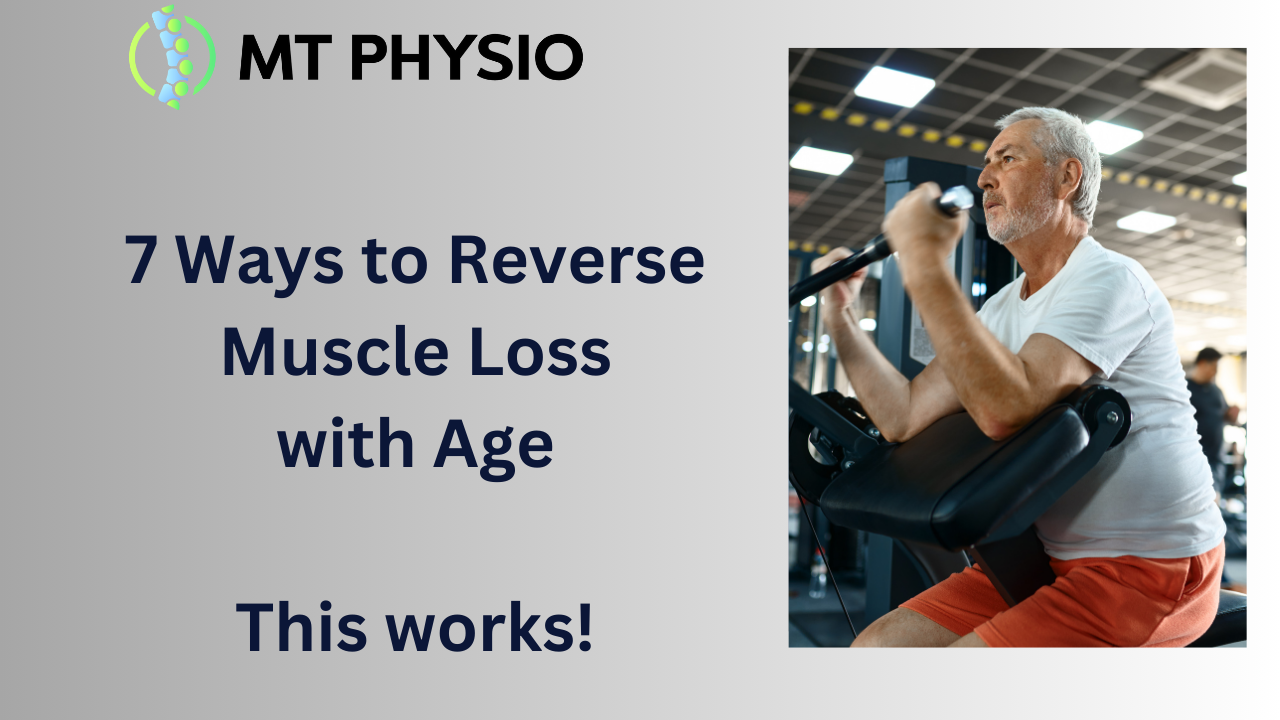
We lose muscle mass as we age this is called Sarcopenia but we can reverse the effects. Follow these 7 tips to reverse muscle loss with age.
It is a fact that once we reach a certain age our muscle mass decreases. Women over 50 undergo hormonal changes, making this happen more easily.
With men over the age of 60, this becomes more prevalent.
This is a problem because low muscle mass has been shown to:
- Increase your risk of falls
- Increase your risk of fracture
- Decrease your Quality of Life
- Is a predictor for an earlier death
- Increase frailty
This all sounds very serious and that’s because it can be.
It has been estimated that as you age you will lose 1-2% muscle loss every year over the age of 50 in women, and 60 in men and this then compounds as we get into our 70’s.
Thankfully, by following the 7 ways that I’ll outline in this article, you can make huge inroads into increasing your muscle mass as you age.
1. Engage in regular strength training
Research has shown that by engaging in regular strength training – 2-3 times per week consistently, we can combat the risk of falls and frailty in general.
By training with resistance, we can build more muscle mass as we age and also by doing so, reduce the risk of osteoporosis and many chronic diseases such as arthritis, type 2 diabetes and heart disease.
The benefits of strength training are huge and cannot be ignored. It should form the basis of your approach to rebuilding muscle mass. Many research papers prove how important this is to seniors.
You don’t need to enrol in an expensive gym membership to do some resistance training and it can be done safely and easily from home using your body weight to begin with and then by investing in some light weights and/or resistance bands.
Exercises such as:
- Squats
- Deadlifts
- Shoulder Presses
- Glute Bridges
- Press Ups
Have you noticed the common theme with all of these movements? I like to prescribe multi-joint exercises for muscle gain. They give us the biggest bang for our buck as it were.
Take the Squat for example. When you perform a Squat you are engaging your ankles, knees, hips, lower back and core. It’s a fantastic multi-joint option. It can also be done just with your body weight alone.
Example home Strength Programme for beginners
- Body weight Squat 2 sets 12 repetitions
- Body weight Deadlift 2 sets 12 repetitions
- Glute Bridge 2 sets of 8 repetitions
- Full Press Up (or knees on the floor or wall press ups) 2 sets of 8 repetitions
This is a fantastic beginner’s routine. But if you find this too hard you can make this even easier. The squats can be made into partial squats by holding onto the back of a chair.
Body weight deadlifts can be made easier by reducing the range of motion and just reaching forward to your knees, not your feet.
You may also choose to do 1 set of each exercise. or reduce the number of repetitions, to begin with and build up as you get used to the exercises. Perhaps add a repetition or two each week until you feel comfortable doing 2 sets of each movement.
Consistency is the most important variable. 2-3 times EVERY week and I’m sorry to say this if you don’t enjoy exercise, but it needs to be for life!
This may seem daunting, but you’ll thank me once you start feeling the benefits of this!
2. Incoporate Aerobic Weight-bearing Exercise
So I’ve told you you need to train with resistance and now I’m telling you that you need aerobic exercise too?!
Yes! But let’s look at the benefits.
Cardiovascular weight-bearing exercises such as running, hiking, walking the dog, nordic walking and gardening have all been shown to have a positive impact on our heart and lung and circulatory health as well as improving inactivity-induced loss of muscle strength, balance and endurance. It helps to reduce the risk of developing Osteoporosis and even combatting the condition should you have already acquired it.
Weight-bearing cardiovascular exercise involves being on your feet which recruits more of your muscles and loads your lower body joints.
The benefits are phenomenal by themselves, but when combined with resistance training the results are amplified.
So you’ve committed to resistance training 2-3 times per week and I’d now like you to add 5000 – 10000 steps into your daily activity to tap into these incredible benefits.
3. Prioritise Protein Intake
One of the main reasons for the decreasing amounts of muscle mass as we age is an inadequate intake of animal protein. If we have inadequate amounts of protein in our diet our bodies start to break down the actual muscle tissue that we have.
Now I realise that this may be controversial for my vegetarian/vegan friends but the research shows that those taking in an adequate amount of animal protein suffer less from the effects of Sarcopenia.
Try and target 0.8-1.2 grams of protein consumed per day per kilogram that you weigh. Some studies advise targeting 1.5 grams of protein.
Sources of animal protein include lean meat, fish and dairy products
Vegetarians and vegans have a harder task of eating the 0.8-1.2 grams of protein recommended but it should still be a priority.
Be careful if you have kidney issues before radically increasing the amount of protein that you consume. Always consult your doctor before embarking on substantial dietary change.
4. Ensure Adequate Nutrition Intake
It’s worth noting that under the heading of Nutrition – adequate protein intake and energy intake are the most important variables as we saw in the “Prioritise Protein Intake” section above and my recommendation is to follow this guide above all other nutritional components.
There is some additional research that suggests supplementing your protein-rich diet with Magnesium, Calcium and Vitamin D. These can provide additional benefits in preventing and reversing Sarcopenia.
Certainly, it is seen that people with low Vitamin D levels suffer more falls than those who do not and are more at risk of fractures and muscle weakness. The recommendation is that we should correct low vitamin D levels.
Reduced calcium in your diet can lead to osteoporosis and reduced general bone health, which could indirectly impact Sarcopenia.
5. Stay adequately Hydrated
Research has shown that water intake from food and fluid was significantly lower in elderly patients with Sarcopenia.
Older adults are more prone to dehydration due to a diminished sense of thirst making them more prone to dehydration.
Dehydration can affect muscular cramping and performance and is essential for optimal joint function.
The amount of water required will vary from person to person. Water can be obtained through the fluids we drink and the foods that we eat.
The familiar mantra of “drink 8 glasses a day” is not a bad place to start to maintain adequate hydration.
You can read more about this subject and how it relates to musculoskeletal issues here.
6. Get Quality Sleep
Sleep quantity may contribute to muscle wasting, declining muscle strength, slow gait speed and sarcopenia.
Our sleep pattern is directly associated with sarcopenia risks in ageing adults by improving our sleep habits we can prevent a decline in muscle function and promote healthy ageing.
Modulating our sleep quality (sometimes easier said than done) and the amount of sleep obtained can help to give our bodies the correct environment to repair and grow healthy muscle tissue.
Strategies such as avoiding electronic devices before bed and setting an appropriate sleep routine are all important when designing a routine that enhances the quality of our sleep and should not be overlooked.
7. Manage Stress
Stress can have a detrimental effect on muscle health and overall well-being.
High-stress levels can lead to muscle tension and reduce your ability to build and maintain muscle mass.
Conclusion
Reversing muscle loss is achievable.
By adopting the strategies discussed in this article, you’ll not only become stronger, but you’ll reduce your risk of falls, decrease your risk of frailty as you age and live a fuller, healthier life.