Deep dull aching pain between your shoulder blade and spine or Upper Back Pain can be painful and debilitating. Find out why you have upper back pain in this article.
It can significantly affect daily life, affecting mobility, breathing and posture.
If you’ve been massaging it and stretching it without relief I will reveal the real cause of your pain and the most effective way of treating it and getting rid of it for good.
Why you have Upper Back Pain
Upper back pain is often caused by two main factors:
- Weak or Tight Muscles – Imbalances in the muscles surrounding the spine, shoulders, and ribcage can lead to stiffness and discomfort. Weak muscles fail to provide adequate support, while tight muscles can cause tension and restrict movement.
- Referred Pain from the Spinal Joints – This is by far the most common casue. The small joints in the upper thoracic spine and lower cervical spine can become irritated due to poor posture, repetitive strain, or degenerative changes such as osteoarthritis. When these joints are inflamed, they can refer pain to the muscles between the shoulder blades, often making massage and stretching ineffective for long-term relief.
When these joints are inflamed, they can refer pain to the muscles between the shoulder blades, often making massage and stretching ineffective for long-term relief.
How to Solve your Upper Back Pain
To effectively manage upper back pain, a combination of strengthening exercises, mobility work, and lifestyle adjustments is essential. Here’s how you can start:
1. Strengthen Weak Muscles
Focusing on key muscle groups will provide better support for your spine and prevent recurring pain. Incorporate these exercises:
- Scapular Retractions: Sit or stand tall, squeeze your shoulder blades together, hold for 5 seconds, then release. Repeat 10-15 times.

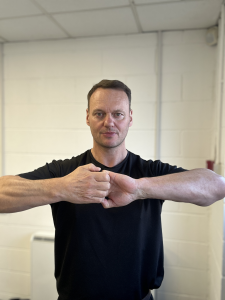
- Isometric Scapula Strengthener: In standing or sitting, link your fingers together as shown. Gently pull the fingers apart whilst at the same time gently squeezing the shoulder blades together. Hold for 2-3 seconds. Repeat 10-12 times.
- Rows with Resistance Band: Anchor a resistance band in front of you, pull the band towards your torso while squeezing your shoulder blades together. Perform 3 sets of 10 reps.

2. Improve Mobility and Reduce Stiffness
Tightness in the upper back and chest can contribute to pain. Stretch and mobilize the area with these techniques:
- Chest Stretch: Stand in a doorway, place your hands on either side, and step forward to open up the chest. Hold for 30 seconds.
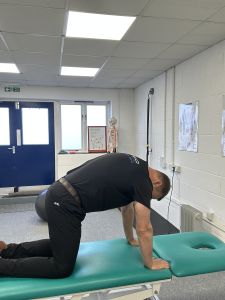
- Cat-Cow Stretch: On all fours, alternate between arching your back (cow) and rounding it (cat) to improve spinal flexibility.
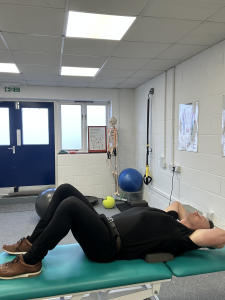
- Thoracic Mobilisation: Position a yoga block or ball at the base of your neck/upper back. With your hands clapsed behind your head lower your head towards the floors that your back is pressing into the yoga block/ball. Hold for 2-3 seconds. You may hear your spine crack and pop in this position and this should feel nice! Lift your head up and hold for 2-3 seconds. Repeat several times. You can move the block to different parts of your back in order to work the whole of the upper back/neck.
3. Correct Posture and Ergonomics
Long hours at a desk or looking down at a phone can contribute to poor posture. Follow these tips:
- Adjust your computer screen to eye level.
- Keep shoulders relaxed and avoid hunching forward.
- Take frequent breaks to stand, stretch, and reset your posture.
- When using your phone, bring it to eye level instead of bending your neck downward.
4. Address Spinal Joint Issues
If your pain is due to spinal joint irritation, the following can help:
- Gentle Spinal Mobilizations: Lying on your back and rotating gently side to side can help loosen stiff joints.
- Heat Therapy: Applying a warm pack to the upper back can promote circulation and ease stiffness.
- Professional Assessment: If pain persists, a physiotherapist can assess your spinal joints and provide hands-on treatments such as joint mobilization or dry needling.
Take control of your upper back pain
Understanding the true cause of your pain is the first step in achieving long-term relief. By strengthening muscles, improving mobility, and making small adjustments to your daily habits, you can reduce pain and prevent it from returning. If symptoms persist despite self-care, seeking professional guidance from a physiotherapist can help to tailor a treatment plan to your specific needs.
If you would like to work with me directly to get help for your upper back pain, you can reach out to me here.